
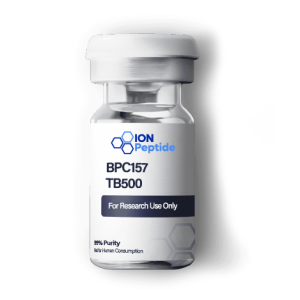
Introduction to Analytical Testing in Modern Research
Analytical testing plays a central role in ensuring the reliability and consistency of research compounds. In the context of peptide-based materials, precision becomes even more critical because small variations in composition can significantly affect experimental outcomes. Among such compounds, BPC157+TB500 has gained attention in laboratory environments where controlled experimentation is essential. The analytical testing of BPC157+TB500 research products ensures that scientists can rely on accurate data, reproducible results, and validated methodologies.
The growing interest in BPC157+TB500 has led to increased demand for rigorous testing protocols. Laboratories now prioritize validated analytical techniques to confirm purity, structural integrity, and stability. Without proper testing, even minor inconsistencies can compromise entire research projects. Therefore, analytical testing serves as the backbone of scientific credibility when working with compounds like BPC157+TB500.
Importance of Purity Assessment
Understanding Purity Standards
Purity is one of the most important attributes in research compounds. When dealing with BPC157+TB500, purity directly impacts how the compound behaves under experimental conditions. High purity levels indicate that the sample contains minimal impurities, ensuring that observed results are due to the compound itself rather than contaminants.
Analytical testing methods such as high-performance liquid chromatography are commonly used to evaluate the purity of BPC157+TB500. These techniques separate components within a sample, allowing researchers to identify and quantify impurities. Maintaining high purity standards is essential for producing consistent and trustworthy research findings.
Impact on Experimental Accuracy
The accuracy of experimental outcomes depends heavily on the quality of materials used. If BPC157+TB500 contains impurities, it may lead to misleading results or false conclusions. Analytical testing helps eliminate such risks by verifying that the compound meets predefined purity thresholds.
By ensuring purity, researchers can confidently attribute observed effects to BPC157+TB500. This reliability is especially important in studies that require precise measurements and repeatability. Without rigorous testing, the integrity of the research process would be compromised.
Structural Verification Techniques
Confirming Molecular Identity
Structural verification is another critical aspect of analytical testing. For BPC157+TB500, confirming the molecular structure ensures that the compound has been synthesized correctly. Techniques such as mass spectrometry and nuclear magnetic resonance spectroscopy are widely used for this purpose.
These methods provide detailed information about the molecular composition and arrangement of atoms within BPC157+TB500. By comparing the obtained data with reference standards, researchers can verify that the compound matches its intended structure. This step is essential for maintaining consistency across different batches.
Ensuring Batch Consistency
Batch-to-batch consistency is vital in research environments where reproducibility is key. Analytical testing allows laboratories to compare different batches of BPC157+TB500 and ensure they meet the same specifications. Any deviation in structure or composition can be detected early, preventing potential issues in experiments.
Consistency also enhances confidence in long-term studies. When researchers use BPC157+TB500 across multiple experiments, they rely on the assumption that each batch behaves identically. Analytical testing makes this possible by maintaining strict quality control standards.
Stability Testing and Storage Conditions
Evaluating Chemical Stability
Stability testing determines how BPC157+TB500 behaves over time under various conditions. Factors such as temperature, light exposure, and humidity can affect the stability of peptide compounds. Analytical testing helps identify optimal storage conditions to preserve the integrity of BPC157+TB500.
By monitoring changes in composition over time, researchers can establish shelf-life parameters. This ensures that the compound remains effective throughout its intended usage period. Stability testing is particularly important for maintaining the reliability of long-term experiments.
Role of Controlled Environments
Proper storage conditions are essential for maintaining the quality of BPC157+TB500. Analytical testing provides insights into how environmental factors influence the compound. Laboratories often use controlled environments to minimize degradation and ensure consistent performance.
Maintaining stability not only preserves the compound but also protects the validity of experimental data. When BPC157+TB500 is stored correctly, researchers can trust that their results are based on a stable and reliable material.
Advanced Analytical Methods
Chromatographic Techniques
Chromatography is one of the most widely used methods for analyzing BPC157+TB500. It allows researchers to separate and identify individual components within a sample. This technique is particularly useful for detecting impurities and verifying purity levels.
Different types of chromatography, including liquid and gas chromatography, offer unique advantages. These methods provide high sensitivity and accuracy, making them ideal for analyzing complex compounds like BPC157+TB500.
Spectroscopic Analysis
Spectroscopic techniques provide detailed insights into the molecular structure of BPC157+TB500. Methods such as infrared spectroscopy and ultraviolet-visible spectroscopy are commonly used to analyze chemical bonds and functional groups.
These techniques complement chromatographic methods by providing additional layers of verification. Together, they create a comprehensive analytical framework that ensures the quality and reliability of BPC157+TB500 research products.
Quality Control and Regulatory Considerations
Establishing Quality Benchmarks
Quality control is a fundamental aspect of analytical testing. Laboratories establish specific benchmarks that BPC157+TB500 must meet before it can be used in research. These benchmarks include purity levels, structural accuracy, and stability parameters.
Analytical testing ensures that each batch of BPC157+TB500 meets these standards. By adhering to strict quality control measures, researchers can maintain consistency and reliability in their work.
Compliance with Research Standards
Although research compounds are not always subject to the same regulations as pharmaceuticals, maintaining high standards is still essential. Analytical testing helps laboratories align with best practices and ensure that BPC157+TB500 is suitable for scientific use.
Compliance with established guidelines enhances credibility and supports the integrity of research findings. It also fosters trust within the scientific community, where accuracy and transparency are highly valued.
Challenges in Analytical Testing
Detecting Trace Impurities
One of the main challenges in analyzing BPC157+TB500 is detecting trace impurities. Even small amounts of contaminants can influence experimental outcomes. Advanced analytical techniques are required to identify these impurities with high precision.
Continuous advancements in technology have improved the sensitivity of analytical instruments. This allows researchers to detect even the smallest variations in composition, ensuring that BPC157+TB500 meets stringent quality standards.
Maintaining Reproducibility
Reproducibility is a cornerstone of scientific research. Analytical testing must be consistent across different laboratories and conditions. Variations in testing methods can lead to discrepancies in results, making standardization essential.
By using validated protocols and calibrated instruments, laboratories can achieve reliable and reproducible results when analyzing BPC157+TB500. This consistency is crucial for advancing scientific knowledge.
Future Trends in Analytical Testing
Integration of Automation
Automation is transforming the field of analytical testing. Automated systems can perform complex analyses with greater speed and accuracy. For BPC157+TB500, this means faster turnaround times and reduced risk of human error.
As technology continues to evolve, automation will play an increasingly important role in ensuring the quality of research compounds. It will also enable laboratories to handle larger volumes of samples without compromising accuracy.
Advancements in Analytical Technologies
New analytical technologies are constantly being developed to improve the precision and efficiency of testing methods. These advancements will further enhance the ability to analyze BPC157+TB500 with greater detail and accuracy.
Emerging techniques may provide deeper insights into molecular behavior, enabling researchers to explore new possibilities in scientific studies. The future of analytical testing holds significant potential for innovation and discovery.
Conclusion
Analytical testing is essential for ensuring the quality, reliability, and consistency of BPC157+TB500 research products. From purity assessment to structural verification and stability testing, each step plays a crucial role in maintaining scientific integrity. By using advanced analytical methods, laboratories can confidently work with BPC157+TB500 and produce accurate, reproducible results.
As research continues to evolve, the importance of rigorous testing will only increase. With ongoing advancements in technology and methodology, analytical testing will remain a cornerstone of scientific progress. For researchers working with BPC157+TB500, maintaining high standards of analysis is not just a requirement but a fundamental aspect of achieving meaningful and reliable outcomes.