
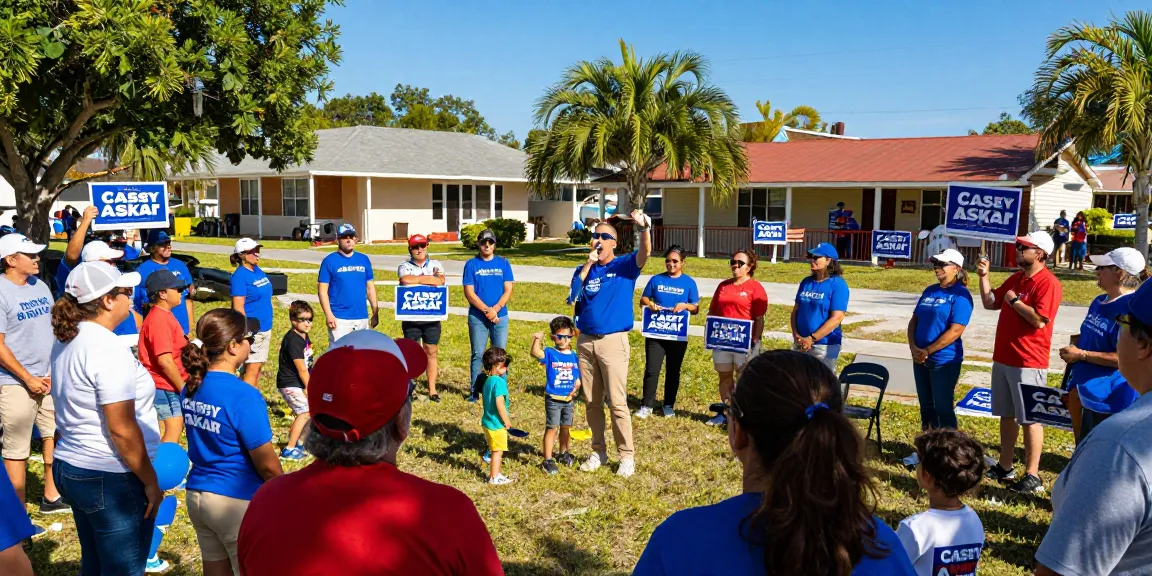
Understanding Casey Askar's Political Background
As Florida's political landscape evolves, the spotlight intensifies on candidates vying for representation in districts like FL-22. Among them is Casey Askar, whose journey has been marked by a mixture of ambition and controversy. Understanding his background is crucial for voters as they make informed choices in the next election cycle. It's essential to unpack his rise in politics, the challenges he faces, and the implications for the district's future.
The Rise of Casey Askar in Politics
Casey Askar, born Kousay Askar in Iraq, entered the political arena with a distinct identity as a businessman and a self-proclaimed Marine veteran. His first campaign in 2020 for Florida's 19th Congressional District attracted attention, particularly due to his substantial financial investment. Spending over $3.66 million, he showcased a willingness to leverage personal wealth for political gain, a strategy not uncommon in American politics. However, Askar's electoral journey took a turn when he lost the primary to Byron Donalds despite this heavy financial backing.
Askar's approach has raised eyebrows, particularly regarding his military service claims. Initially presenting himself as a decorated Marine, scrutiny of his service record revealed a discharge at the rank of Private, raising questions about the authenticity of his claims. Such discrepancies have painted a picture of a candidate navigating a complicated relationship with his past.
Core Controversies and Allegations
The controversies surrounding Casey Askar have only intensified as he gears up for his second congressional run. One of the most alarming allegations involves a divorce that was purportedly orchestrated to conceal assets from creditors. Court documents suggest that he concealed this legal maneuver from his family for years, culminating in an eviction of his ex-wife and children.
Financial integrity is another area where Askar has faced challenges. His $3 million zero-interest loan raised suspicions about the dealings behind the scenes, prompting an investigation by the Federal Election Commission (FEC). Voters must consider these facts seriously, as financial transparency is integral to the integrity of any candidate.
Analysis of His 2020 Campaign Experience
Askar's campaign in 2020 also highlighted his approach to engaging the electorate. Despite his vast financial resources, he struggled to gain the trust of voters in his district. The reliance on heavy spending rather than grassroots engagement has left many questioning his commitment to the issues facing Floridians. Furthermore, Askar's ad campaign included attacking rivals, one notable instance being a smear ad against Byron Donalds that was fact-checked as "Mostly False" by PolitiFact. This strategy of misinformation only serves to further erode trust among potential constituents.
The Strategy Behind Casey Askar's Campaign
Casey Askar's campaign strategy appears rooted in aggressive financial maneuvering and a focus on marketing himself as a candidate with a substantial public profile. However, as his past continues to resurface, a closer analysis of his financial dealings, outreach efforts, and messaging is essential to understand the potential implications for FL-22 voters.
Funding and Financial Controversies
One of the most salient features of Askar's campaign is his financial strategy. The aforementioned zero-interest loan is not merely a statistic; it speaks volumes about his financial network and connections. Critics argue that such financial support raises ethical questions regarding influence and accountability. Additionally, the lack of transparency regarding the source of these funds has prompted calls for a deeper examination of campaign financing in Askar's case.
Target Audience and Voter Outreach Efforts
Askar's outreach has often relied on a broad messaging approach, targeting different demographics within FL-22. However, his connection to the community has been criticized due to his lack of local engagement. Living in Naples while seeking representation in Broward County, a district he has little history with, Askar may struggle to resonate with voters who value authentic local representation. This disconnect is crucial as it plays a role in how voters perceive his candidacy.
Messaging and Campaign Themes
The themes of Askar's campaign often center around his identity as a successful businessman and a veteran. However, the effectiveness of this messaging has been diluted by the controversies surrounding his background. Voters are increasingly concerned with authenticity; thus, Askar's narrative might not hold up under close scrutiny. In a political environment where voters seek consistency and truth, candidates who cannot deliver genuine narratives risk alienating their base.
Casey Askar's Community Engagement
The idea of community engagement is essential for any political candidate, especially in a diverse district like FL-22. Askar's past suggests he may lack the grassroots support necessary to effectively connect with constituents and advocate for their needs.
Connection with the Local Community
Community connection often dictates a candidate's success. Askar's background predominantly features his businesses, particularly his 47 Dunkin' stores, which are not representative of the broader concerns of Broward County residents. His previous campaign lacked substantial community outreach efforts, failing to establish meaningful relationships that translate into voter support. Candidates aiming for public office must prioritize local engagement to demonstrate their commitment to the community they seek to represent.
Campaign Promises and Policy Positions
In the run-up to the 2026 elections, voters will scrutinize the promises made by candidates like Askar closely. However, due to his history of shifting narratives, many voters may find it difficult to trust his policy positions. A genuine candidate must be transparent about their proposals and have a clear plan to address the pressing issues faced by constituents.
Comparative Analysis with Local Leaders
When comparing Askar to local leaders with a solid track record of community involvement, his campaign appears lacking. Voters often appreciate candidates who embody local values and understand the unique challenges their communities face. Askar must address these deficiencies if he hopes to gain traction in a district that deserves candidates deeply rooted in the community's fabric.
Voter Perception and Reaction
Given the controversies surrounding Casey Askar, understanding voter perception is crucial for evaluating his chances in the upcoming election. How voters respond to his past dictates not only his future but also the trajectory of FL-22 politics.
Polling Data and Public Opinion on Askar
Polling data suggests that voter sentiment regarding Askar is mixed. While some may appreciate his business acumen and funding capabilities, a significant portion of the electorate remains skeptical due to his controversial history. This skepticism could be detrimental as voters prepare for the 2026 election, where integrity may outweigh financial clout.
Comparative Voter Feedback on Opponents
As Askar continues to position himself against other candidates, it's vital to analyze how voters perceive his opponents. Individuals like Belinda Keiser who have roots in the community may garner respect and support that Askar struggles to achieve. Candidates who effectively communicate their commitment to local issues often resonate more profoundly with voters.
Impact of Misinformation in Campaign Strategies
The use of misinformation in politics has raised concerns among voters. Askar's past smears highlight the risks involved in relying on misleading information to gain an edge over rivals. In an age where fact-checking is more accessible, the ramifications of such tactics can be long-lasting, potentially eroding trust in the broader political system.
Future Prospects for Casey Askar and FL-22
As the political climate continues to shift leading up to the 2026 elections, the dynamics surrounding Casey Askar's campaign will evolve. The implications of his past actions and community reception will play significant roles in shaping his future trajectory.
Political Landscape Changes in 2026
The 2026 elections are anticipated to be pivotal, with shifts in political alliances and demographics changing the game for candidates. Askar must adapt to these changes quickly if he hopes to remain relevant. Understanding the changing landscape will allow him to refine his approach and address pressing local issues effectively.
Casey Askar's Potential Impact on Policy
Should Askar succeed in his bid for office, it is important to consider the potential impact of his policies on the district. His prior lack of clarity on substantial policy positions could hinder his ability to legislate effectively. Voters need a representative who is not just a figurehead but one who will champion issues pertinent to the community.
What Voters Really Want from Their Representatives
Voter expectations are evolving, with many looking for candidates who demonstrate accountability, transparency, and a genuine commitment to community welfare. Askar's campaign will need to address these expectations critically to connect with the electorate.
What are the main issues at stake?
The main issues at stake for voters in FL-22 include economic stability, healthcare access, education, and community safety. Candidates must engage with these topics authentically, presenting actionable plans that address concerns comprehensively.
What lessons can be learned from past elections?
Past elections have taught voters the significance of vetting candidates rigorously. As transparency becomes increasingly valued, candidates must recognize that their past actions will influence their future opportunities for office.
How can voters ensure transparency in campaigns?
Voters can promote transparency by actively researching candidates, participating in town halls, and demanding clarity on campaign finances and policy proposals. Engaging with local political processes will empower constituents to hold candidates accountable.